I think India has more festivals than days in the year. Yesterday was Independence Day but also Varalakshmi Puja dedicated to the Hindu goddess of wealth and prosperity. The festive spirit continues today with Raksha Bandhan. This festival celebrates the relationship between brothers and sisters.
Today sisters will be trying a thread or bracelet (a rakhi) on their brothers' right wrists to wish them good health. Brothers then take on the responsibility to protect their sisters and give them a small gift in return.
If a brother lives far away, no problem - his sister can easily send him his rakhi in a special tear-proof and water resistant Rakhi envelope available at the post office.
Happy Raksha Bandhan to brothers and sisters everywhere!
Today India celebrates 61 years of independence. Indians are very proud of their country, and I think they have lots of reasons to be. I don't know any other country as culturally and linguistically rich as India. This is what fascinates me about this country.
This week in The Times of India, Shashi Tharoor made some interesting reflections on India's linguistic diversity. He described how 12 years ago when India was celebrating its 49th year of independence, the then Prime Minister, HD Deve Gowda, made a speech in Hindi. This was nothing remarkable, as such a speech happens every year, but what was unusual was that this Prime Minister, coming from Karnataka and having Kannada as his mother tongue, didn't actually know how to speak Hindi. So how did he do it then? The Hindi script was transcribed for him in the Kannada alphabet which he then read out to the nation. "...which of course made no sense," Tharoor concludes.
Tharoor reflects that such an incident "represents the best of the oddities that help make India India. Only in India could a country be ruled by a man who does not understand its 'national language'. Only in India, for that matter, is there a 'national language' that half the population does not understand. And only in India could this particular solution be found to enable the prime minister to address his people."
He describes Hindi as "the language which we have all learned to refer to (though the term has no constitutional basis) as India's 'national language'," and confirms that "No language enjoys majority status in India, though Hindi is coming perilously close." He then describes his linguistic reality which may be the reality for many Indians: "... I was a typically Indian child: I spoke Malayalam to my mother, English to my father, Hindi to our driver, Bengali to our domestic help and Sanskrit to God."
Indians seem to learn languages by some strange process of osmosis. Many people speak 3, 4, 5 languages. When I ask "How did you learn Tamil?" I get the response: "Oh, I had a Tamil neighbour." Or "How come you speak Telugu?" "I had a Telugu friend at school who taught me." In the west, a person who speaks many languages is held in awe and considered to be highly intelligent. In India this is commonplace. The lady who comes to wash my floors told me she has never been to school but she speaks four languages: Kannada, Telugu, Tamil and Hindi. English is not in that list, so how do we communicate? Between my six words of Kannada, eight words of Tamil and numbers in Hindi up to five, and her ten words of English and some sign language we manage to understand each other!
Tharoor concludes his column by 'singing the virtues of pluralism': "It is a reality that pluralism emerges from the very nature of our country; it is a choice made inevitable by India's geography, reaffirmed by its history and reflected in its ethnography. Let us celebrate our Independence on August 15 in a multitude of languages, so long as we can say in all of them how proud we are to be Indian."
After five weeks in Europe, I’m now back in Bangalore under its monsoon skies!
My landlady has given me a full update on what I missed while I was away: “We had rain for a full week,” and: “One day last week we had a power cut that lasted six hours!” I certainly hadn’t missed the power cuts and I had had enough monsoon-like rain during my first two weeks in Belgium.
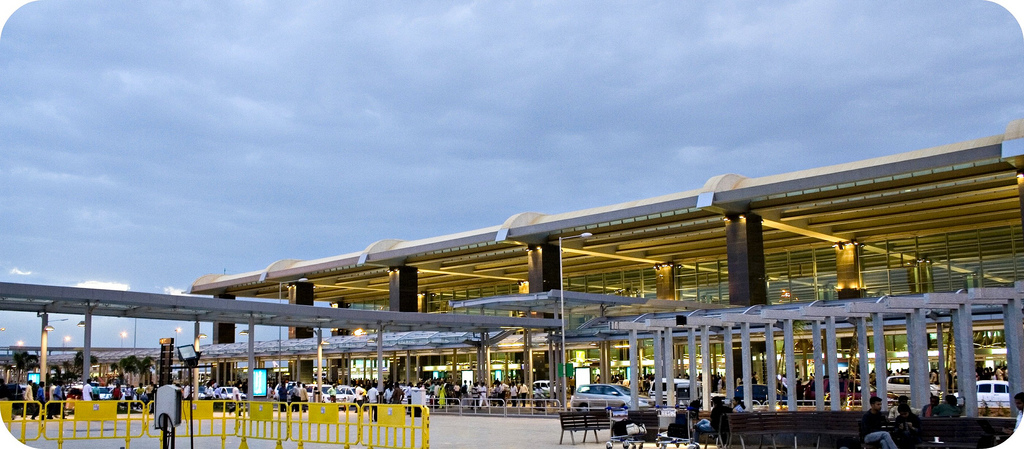
She wanted to know what the spanking brand-new Bangalore International Airport is like. “My friends told me it’s just like in Western countries!” Yes, Bangaloreans are proud of their new airport and it’s everything you would expect in an international airport, complete with designer shops and even an Illy café. The only problem is the distance… while the old airport was just an easy 10-minute drive away, it took me an hour to get to the new airport which is 35 kilometres away. The same journey could take 2 to 3 hours during daytime traffic.
Arriving in the middle of the night, I learned that the pre-paid taxi system has been replaced by a fleet of brand new air-conditioned ‘city cabs’ which run on metres. In no time we were speeding along the near-empty multi-lane road which had been specially-built to provide access to the new airport. I was wondering if I had somehow landed in Dubai instead, but soon the new road ended as we approached Bangalore city and the familiar beep-beep of road traffic woke me from my reverie and I realised that I was back in India after all!
The cashier at the supermarket handed me a small tube of a type of cream. “Oh, another freebie,” I thought. Often when you buy certain products a sample of something or other is on offer for free. This time the bottle of shampoo I was buying was offering a free sample of this cream. I had a closer look. It was a tube of ‘Fair and Lovely’ fairness cream. I handed it back to the cashier, who it took it back with a smile and said: “Oh, you don’t need this, Madam!” I had to laugh because in Europe, my olive complexion is considered dark, but here I get comments like: “That colour you’re wearing looks so nice on your fair skin!” That goes to show that everything is relative, even skin colour.
It’s hard to ignore the importance put on skin colour in India. I hear all kinds of comments around me like: “You’re looking dark, are you sick?”, which I find funny because in the West, paleness is considered to be a sign of ill health! “Oh, you got so tanned!?” was my dance teacher’s reaction hinted with disapproval after I came back from a holiday. Again, this contrasts with the popularity of sun beds and tanning creams in the West!
Beauty salons offer skin-whitening treatments and creams like Fair and Lovely are very popular. I don’t know if they work or not, but it’s a shame that attractiveness and even social mobility seems to be linked with skin colour. This is the message anyway which is conveyed by magazine advertisements and television commercials which invariably feature very pale-skinned models and actors. You don’t have to look further than the matrimonial ads in the Sunday paper to see the value placed on skin-colour: potential marriage partners are described as ‘very fair’, with a ‘wheatish complexion’ or ‘medium colour’.
Ads for Fair and Lovely used to run on television but this soon stopped when there were protests against their overt ‘insulting’ and ‘racist’ messages.
Here’s an example: a young woman goes to inquire about a job with her father. She’s wearing a sari and her father is dressed in traditional clothes. A very pale-skinned woman dressed in white at reception gives them a once-over and pretentiously tells them that they are a ‘modern beauty company’. As the young girl and her father turn to leave, the receptionist makes a snide comment about the girl’s appearance. When they get home, the father looks through his Ayurvedic texts for a recipe for fair skin. Fast forward to the future and his daughter is now much more fair-skinned and dressed in chic western clothes. She goes back to the same company but this time she turns heads and the same receptionist is suddenly speechless when she sees her. Suddenly she’s disembarking from an airplane to meet a crowd of television cameras. She’s an instant star thanks to Fair and Lovely Ayurvedic formula.
Watch the ad here:
Ads for Fair and Lovely do still appear on television but they are less explicit. However, the girl always somehow becomes a big star at the end, surrounded by cameras and admirers:
It's been raining every evening for the past week or so, but the papers kept announcing that the monsoon was to "arrive soon". It seemed to me that it had already started, but apparently these rains were only 'pre-monsoon showers', as the 'official' monsoon traditionally starts on June 1st in the south-western coastal state of Kerala, before moving northwards.
Image courtesy of Wikimedia Commons.
After a week or so of this, today's The Hindu newspaper finally made it official: "Expect rain for five days a week in the next four months", read the headline.
Accompanied by thunderclaps and strong winds, the south-west monsoon arrived in Karnataka on Saturday, just as the Meteorological Centre in Bangalore had predicted, three days ahead of its usual schedule.
Having set in over coastal and south interior Karnataka, the monsoon will spread to north interior Karnataka in three days.
The India Meteorological Department in Delhi on Saturday declared the arrival of the monsoon in Kerala and parts of Tamil Nadu and will officially declare the monsoon in the State on Sunday, said the Director of the centre in Bangalore, A. Muthuchami.
For the next four months most parts of the State, including Bangalore, can expect rain at least five days a week and a welcome break from rising temperatures, which are expected to dip to 28 degrees, said Dr. Muthuchami. The State would receive normal rainfall (82 cm) this monsoon in the next four months, he added...
The onset of the monsoon is always eagerly awaited and then welcomed enthusiastically once it arrives after the heat and humidity of the summer months. But the rains also bring a fair share of problems with flooding, traffic jams and falling trees...
Meanwhile, the monsoon entered with a characteristic bang in Bangalore. It rained continuously in the evening in many parts of the city. The lack of preparation by the city administration was reflected in the fact that almost all arterial roads were flooded, throwing the weekend traffic out of gear. Many residential localities reported flooding and rainwater entering the houses.
Due to an overflowing storm water drain that cuts across the Kengal Hanumantaiah Double Road, traffic movement was almost blocked on this road. Flooded roads affected vehicular movement near the Dell office on Koramangala Inner Ring Road as well.
Gusty winds that preceded the rains uprooted many trees. A huge tree was uprooted on Miller’s Road near CSI hospital blocking traffic for more than two hours...
Summer is now over and the monsoon has officially begun. Tomorrow schools are due to re-open and a new academic year starts for students. It's time to dig out the umbrellas and watering the plants will no longer be a daily chore!